

First Slice: Why a Good Knife Matters
Slicing Pecorino Romano with a flimsy bread knife is a mistake. The cheese crumbles, the texture suffers, and the experience feels wrong. A good cheese knife isn't a luxury; it's essential for more than just getting a piece of cheese from point A to your mouth.
The right knife impacts cheese texture and flavor release. A dull or incorrect blade compresses cheese, bruising its structure and muting taste. For a soft cheese like Camembert, a thin blade preserves its creamy interior. Hard cheese requires a different approach.
Different cheeses need different blades. Soft cheeses require a thin, flexible blade to glide through without squashing. Semi-hard cheeses benefit from a firmer blade. Hard cheeses, like Romano, need a robust blade to break through their dense structure. Ignoring these nuances means you’re not truly experiencing the cheese.
A proper cheese knife elevates the experience, showing respect for the cheesemaker’s craft and appreciating flavor and texture nuances. A sharp, well-chosen knife transforms a simple snack into a pleasure.
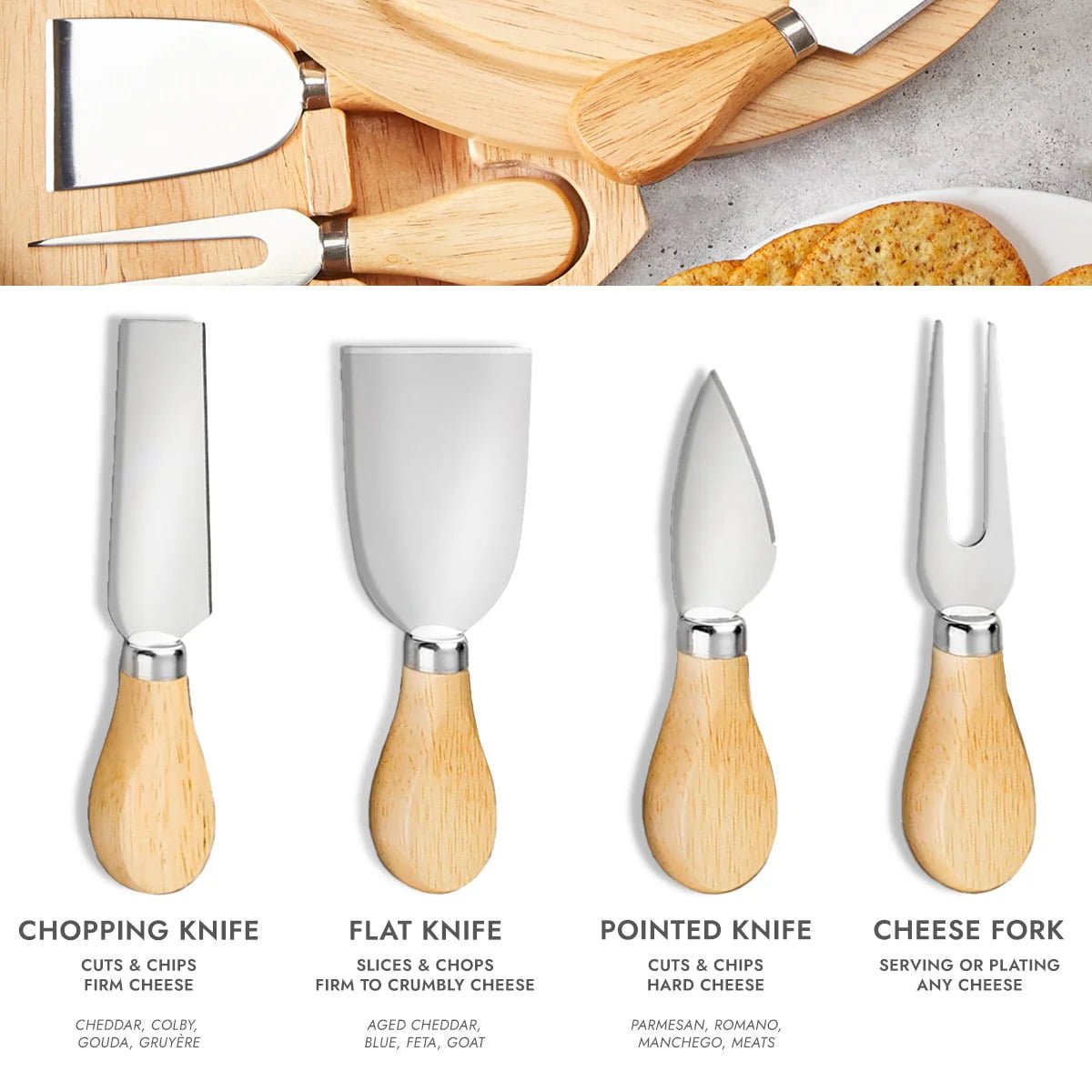
Decoding Knife Styles: A Visual Guide
Understanding basic cheese knife styles makes choosing the right tool easier. The flat knife is an all-purpose workhorse, ideal for soft and semi-soft cheeses. Its broad blade allows for easy spreading and portioning.
The pronged knife is perfect for crumbly cheeses like blue cheese or feta. Its prongs allow you to lift and serve without damaging the delicate texture. A Granton edge knife has hollowed-out indentations along the blade. These create air pockets, preventing sticky cheeses from clinging and ensuring a clean cut, making it useful for semi-hard cheeses.
For harder cheeses, a wire cheese slicer cuts effortlessly through hard rinds and crumbly interiors. Specialized knives, like those for Parmesan, have a pointed tip for breaking off chunks. Stainless steel blades are durable and easy to maintain, while carbon steel holds a sharper edge but requires more care to prevent rust.
Handle material impacts the experience. Wood handles offer a classic feel and comfortable grip but require oiling. Synthetic handles are often more durable and dishwasher-safe. The best handle material is a matter of personal preference and maintenance commitment.
- Flat Knife: Soft & Semi-Soft Cheeses
- Pronged Knife: Crumbly Cheeses
- Granton Edge Knife: Semi-Hard, Sticky Cheeses
- Wire Cheese Slicer: Hard Cheeses
- Parmesan Knife: Parmesan & other very hard cheeses
Cheese Knife Styles & Pairings
- Flat Cheese Knife - Ideal for soft-ripened cheeses like Brie and Camembert. The thin blade allows for clean cuts without squashing the delicate texture.
- Pronged/Forked Cheese Knife - Best suited for harder, crumbly cheeses such as Cheddar, Gouda, and Parmesan. The prongs help lift and serve pieces without breaking them.
- Granton Edge Cheese Knife - Features a series of hollowed-out indentations (granton edge) that prevent cheese from sticking to the blade. Excellent for semi-hard cheeses like Gruyère and Emmental.
- Hard Cheese Knife - Specifically designed for very hard cheeses like Pecorino Romano and aged Parmesan. These knives have a pointed tip for breaking off pieces and a sturdy blade for slicing.
- Serrated Cheese Knife - Works well with cheeses that have a sticky or crumbly texture, such as Feta and young Gouda. The serrations saw through the cheese without compressing it.
- Cheese Spreader - Not a knife, but essential for soft cheeses like cream cheese and Boursin. Allows for easy and even spreading on crackers or bread.
- Parmesan Knife - A specialized knife with a distinctive blade shape designed to split and carve wedges of Parmesan Reggiano. Often features a V-shaped tip.
2026’s Top 7 Cheese Knife Sets
A cheese knife set can streamline cheese board preparation. Based on reviews from Food & Wine, Nothing But Knives, and YouTube channels, here are seven of the best options available in 2026. 'Best' is subjective, and the ideal set depends on your personal cheese preferences and budget.
1. Cuisinart C77SS-15PK 15-Piece Cheese Lover’s Set (Approx. $60-80): This set ranks high for value, including a variety of knives for different cheese types, plus spreaders and markers. Reviews note the stainless steel blades hold a decent edge, but aren’t the sharpest available. It's a good starting point for beginners.
2. Prodyct 7-Piece Stainless Steel Cheese Knife Set (Approx. $40-50): This set, frequently reviewed on YouTube, focuses on practicality. It includes essential knives for most cheese types and is praised for its durable construction. The handles are ergonomic and provide a comfortable grip. Some users find the stainless steel doesn’t hold an edge as long as carbon steel.
3. Boska Cheese Knife Set (Approx. $100-150): Boska is a well-respected brand in the cheese world, and their sets reflect that quality. This set features beautifully crafted knives with comfortable handles. Food & Wine reviewers praise the sharpness and precision of the blades. It’s a significant investment but delivers a premium experience.
4. Premium Cheese Knife Set by Nothing But Knives (Approx. $90-120): Nothing But Knives offers a good selection of knives for a variety of cheeses, made from high-quality stainless steel. The set also includes a wooden storage box.
5. Rachael Ray 5-Piece Cheese Knife Set (Approx. $30-40): This affordable option offers a good selection of essential knives. While the quality isn’t on par with higher-end sets, it’s a solid choice for occasional cheese boards. The colorful handles add a touch of fun.
6. Forté Harvest 6-Piece Cheese Knife Set (Approx. $70-90): This set stands out for its unique acacia wood handles, providing a warm and natural aesthetic. The stainless steel blades are designed for a variety of cheeses. It’s a stylish and functional option.
7. Sohome 7-Piece Cheese Knife Set with Bamboo Handle (Approx. $50-60): This set combines durable stainless steel blades with eco-friendly bamboo handles. It’s a good all-around option for those looking for a sustainable choice. The set also includes a small cheese board.
- Consider the number of knives included – do you need a set for every cheese imaginable, or just the essentials?
- Pay attention to the blade material – stainless steel is easier to maintain, while carbon steel holds a sharper edge.
- Think about the handle material – wood offers a classic feel, while synthetic materials are more durable.
Featured Products

Professional set designed for hard cheeses like Parmesan · Includes scoring knife, breaking knife, and two Parmesan knives · Durable stainless steel construction with ergonomic handles
This professional set offers specialized tools for expertly breaking and slicing hard cheeses, ensuring precision and ease of use.

Comprehensive 6-piece set for various cheese types (hard, medium, soft) · Made from premium stainless steel for durability · Includes a butter knife and mini cheese cutter
This versatile set provides essential tools for cutting and serving a range of cheeses, perfect for any charcuterie board or gathering.
Professional set designed for hard cheeses like Parmesan · Includes scoring knife, breaking knife, and two Parmesan knives · Durable stainless steel construction with ergonomic handles
This professional set offers specialized tools for expertly breaking and slicing hard cheeses, ensuring precision and ease of use.

Multi-functional slicer suitable for all types of cheese · Handheld design with a non-stick silver finish · Durable stainless steel construction
This versatile slicer offers a convenient and effective way to cut uniform slices of any cheese type, simplifying preparation.

Complete 4-piece set for various cheese cutting needs · Features elegant Acacia wood handles for a comfortable grip · Crafted from high-quality stainless steel
This stylish set combines functionality with aesthetic appeal, providing essential tools for cheese lovers and making an excellent gift.
As an Amazon Associate I earn from qualifying purchases. Prices may vary.
Romano and Hard Cheese: Blade Geometry Matters
Slicing hard cheeses like Romano, Parmesan, and aged cheddar requires a different approach than softer varieties. These cheeses have a dense, crystalline structure that resists cutting. A thinner, more pointed blade cleanly breaks through that structure without crumbling the cheese into useless shards.
Avoid compressing the cheese. A blade with a slight curve facilitates a rocking motion, allowing controlled pressure and shearing through the cheese. This is breaking the cheese along its natural lines, not simply slicing. A wider blade makes this motion awkward and less effective.
A dedicated Parmesan knife, with its short, pointed blade, is designed for this purpose. A high-quality cheese knife with a tapered blade can also work well. Look for a rigid blade to maintain control and prevent bending during cutting. The angle of the blade's edge is important; a sharper angle penetrates hard cheese better.
Don't be afraid to use a gentle sawing motion in addition to the rocking motion. This helps to create a clean break and prevents the cheese from crumbling. Remember, the goal isn't to create perfectly uniform slices—it's to obtain flavorful, manageable pieces.
Beyond the Set: Essential Individual Knives
While a set is a great starting point, certain individual knives excel at specific tasks. The OXO Good Grips Parmesan Cheese Slicer ($20-30) is a standout. Its unique design allows you to create delicate shavings of Parmesan with ease. The protective guard ensures safety, and the ergonomic handle provides a comfortable grip.
For those who frequently slice hard cheeses, a high-quality wire cheese slicer is a worthwhile investment. The Premier Stainless Steel Wire Cheese Slicer ($30-40) is a popular choice, known for its durability and clean cuts. It’s particularly useful for cutting large blocks of cheese quickly and efficiently.
Finally, the Victorinox Fibrox Pro 8-Inch Cheese Knife ($25-35) is a versatile option for a variety of cheeses. Its long, thin blade is ideal for soft and semi-hard cheeses, and the Fibrox Pro handle provides excellent grip and control. It’s a workhorse knife that can handle a variety of tasks.

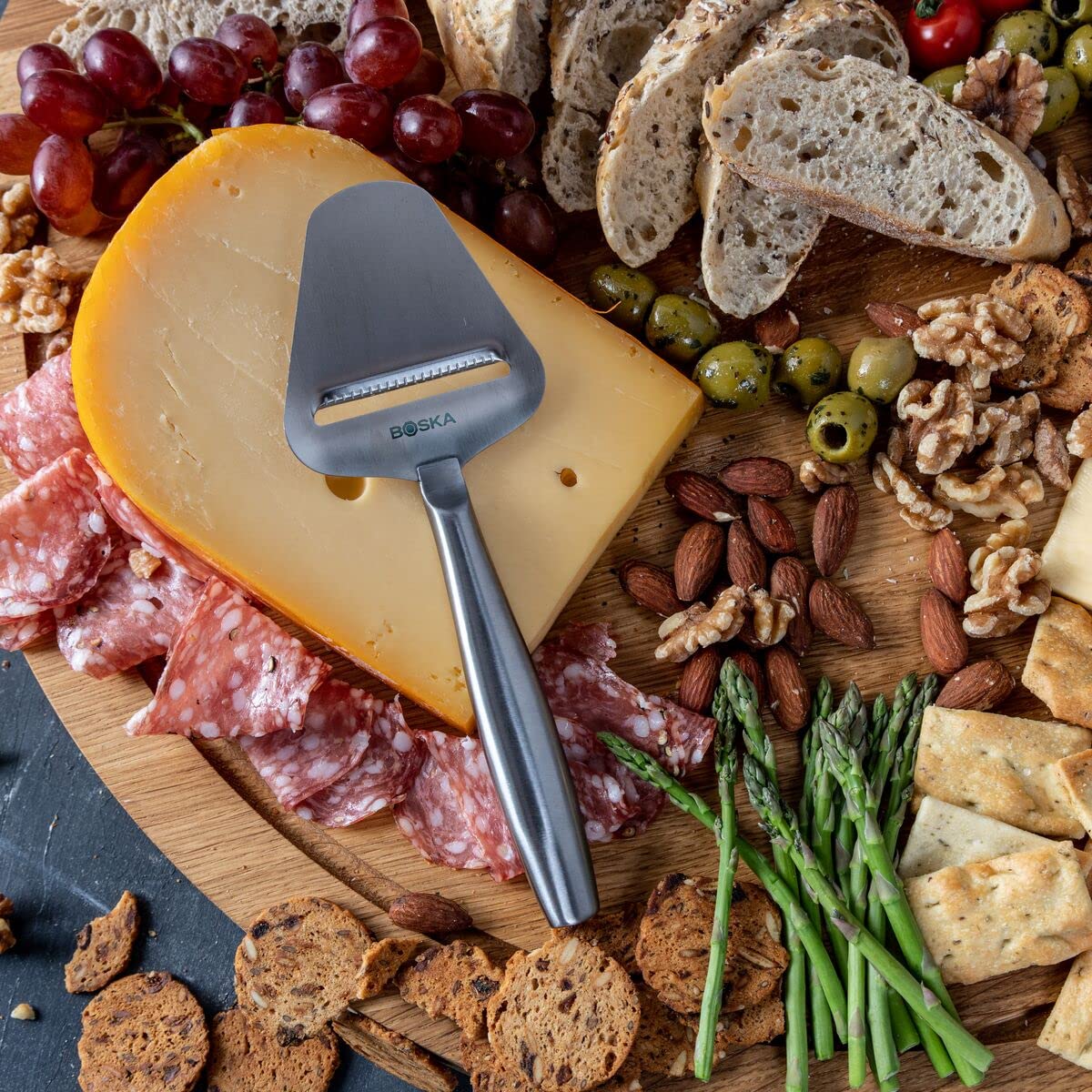
BOSKA Stainless Steel Cheese 3 Knife Set - Copenhagen For All Types of Cheese - Multi-Functional Cheese Slicer - Handheld Slicer - Silver Non-Stick - Dishwasher Safe - For Kitchen Cooking
- Set includes three stainless steel cheese knives
- Suitable for all types of cheese, including hard varieties
- Handheld slicer design for precise control
- Non-stick coating for easy slicing and cleaning
- Dishwasher safe for convenient maintenance
The BOSKA Stainless Steel Cheese 3 Knife Set - Copenhagen is an excellent choice for slicing hard cheeses like Romano, offering professional-grade tools that align perfectly with the needs of home chefs seeking precision and versatility.
View on Amazon →As an Amazon Associate I earn from qualifying purchases.
Caring for Your Investment: Knife Maintenance
Proper maintenance is essential to keep your cheese knives in top condition. The most important rule: hand-wash your knives. Dishwashers can dull the blades and damage the handles. Use warm, soapy water and a soft sponge to clean the blades thoroughly.
After washing, dry the knives immediately to prevent rust. For carbon steel knives, applying a thin coat of mineral oil can help protect the blade. Avoid using abrasive cleaners or scouring pads, as these can scratch the surface. Regularly honing your knives will help maintain their sharpness.
Sharpening is also crucial, but should be done less frequently than honing. Depending on usage, you may need to sharpen your knives every few months. You can use a whetstone, an electric sharpener, or take them to a professional. Removing dried cheese residue promptly is key—don't let it harden on the blade.
Finally, store your knives safely in a knife block, magnetic strip, or individual sheaths to protect the blades and prevent accidents. Proper care will ensure your cheese knives last for years to come.
- Hand-wash with warm, soapy water.
- Dry immediately after washing.
- Apply mineral oil to carbon steel blades.
- Hone regularly to maintain sharpness.
- Sharpen as needed (every few months).
- Store safely in a knife block or magnetic strip.
Troubleshooting: Common Knife Problems
Even with proper care, you may encounter problems with your cheese knives. Dullness is the most common issue. If your knife is struggling to cut through cheese, it’s time to sharpen it. Rust can occur on carbon steel knives if they’re not properly maintained. Clean and dry the blade thoroughly, and apply a coat of mineral oil.
A broken blade is a more serious problem. If the blade is severely damaged, it’s usually best to replace the knife. Attempting to repair a broken blade can be dangerous. Difficulty slicing certain cheeses can often be resolved by using the correct knife for the job. Make sure you’re using a blade that’s appropriate for the cheese’s texture.
If cheese is sticking to the blade, try using a Granton edge knife or lightly oiling the blade with cooking spray. Finally, if a knife is beyond repair, don’t hesitate to replace it. A dull or damaged knife is more dangerous than a sharp one.
- Dullness: Sharpen the knife.
- Rust: Clean, dry, and oil the blade.
- Broken Blade: Replace the knife.
- Sticking Cheese: Use a Granton edge knife or oil the blade.
Community Favorites: What Cheesemongers Recommend
While direct quotes from cheesemongers were hard to come by in available sources, online cheese communities offer valuable insight. On Reddit's r/cheese, discussions frequently highlight the importance of a simple, well-made flat cheese knife for everyday use. Many users swear by Victorinox knives for their affordability and durability.
Several threads emphasize the value of a dedicated Parmesan knife for breaking off shards of the hard cheese. Users consistently recommend knives with a short, pointed blade and a comfortable handle. The consensus seems to be that you don't need a huge collection of specialized knives—a few well-chosen tools are sufficient.
One user on a cheese forum noted, "A sharp knife is the most important thing. You can get away with just one good knife and a little patience." This sentiment is echoed throughout the online cheese community: prioritize quality and sharpness over quantity.


No comments yet. Be the first to share your thoughts!