

The Essential Cheese Knife Lineup
A good cheese knife enhances the cheese experience. The wrong tool can mangle a delicate brie or make wrestling with hard parmesan frustrating. Using the right knife makes a noticeable difference.
Most cheese knives use stainless steel, valued for its corrosion resistance and easy cleaning. Carbon steel blades hold an edge longer but need careful maintenance to prevent rust. Handles are made from materials like wood, plastic, or composites, with choice often based on preference and budget.
Caring for cheese knives is straightforward. Hand wash them to avoid dulling the blade or damaging the handle with harsh detergents or dishwashers. Occasional honing keeps the edge sharp. Proper maintenance preserves your knives and ensures a good cheese experience.
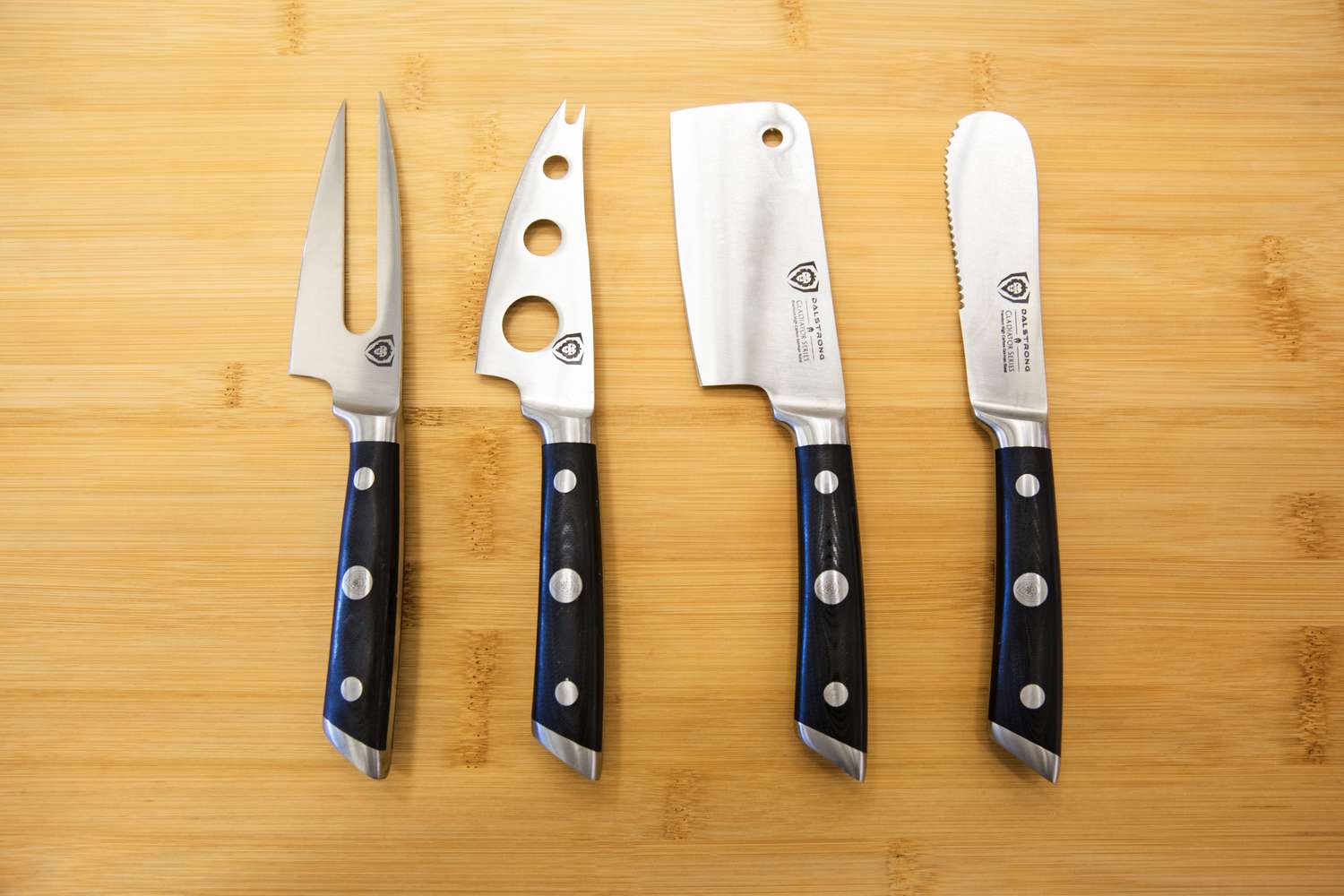
Soft Cheese Specialists: Spreaders & Flayers
For soft, spreadable cheeses like brie, camembert, and chèvre, use a knife that won’t tear or compress their delicate texture. An ideal tool has a flat, thin, and often slightly flexible blade that glides through the cheese easily.
Spreaders come in different shapes. Flat ones are ideal for a smooth, even spread. Curved spreaders are useful for scooping or creating decorative swirls, especially with very soft, almost runny cheeses.
Spreaders can also slice semi-soft cheeses like Havarti or Monterey Jack, though less efficiently than a dedicated slicer. Look for spreaders with a slightly beveled edge for better slicing. Formaticum offers a range of Italian-made spreaders.
Semi-Hard Cheese Slicers: The Serrated Edge
For semi-hard cheeses like cheddar, gouda, and Gruyère, a serrated edge works well. It saws through the cheese, creating small, clean cuts that prevent crumbling.
Serration levels vary. Aggressive serrations tackle harder cheeses, while subtler ones suit softer varieties and are often preferable for everyday use to avoid tearing the cheese.
Blade length matters. Longer blades are useful for large blocks, while shorter blades offer more control for smaller portions. Wüsthof offers various cheese knives with different serration patterns and blade lengths. Their 5-inch slicer is a good all-rounder.
- Choose the right serration: Aggressive for harder cheeses, subtle for softer.
- Consider blade length: Longer for large blocks, shorter for control.
- Look for a comfortable handle: You'll be using this a lot!
Hard Cheese Heroes: Breaking & Chiseling
Hard, aged cheeses like Parmesan, aged cheddar, and Manchego require a different approach than conventional knives, which can be frustrating or dangerous. Use knives designed for breaking off chunks or creating shavings.
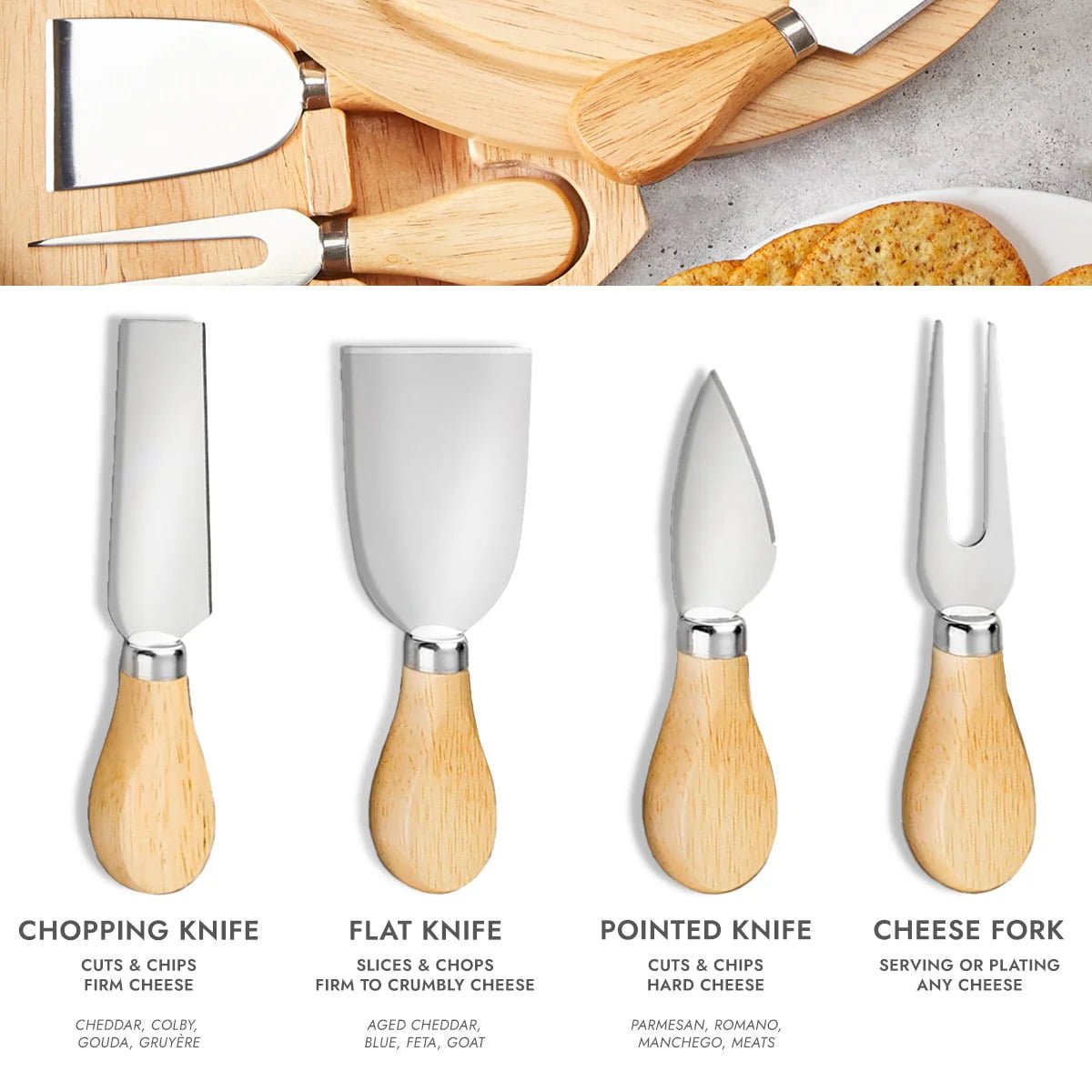
Knives with a forked tip are designed for Parmesan. The tip wedges under the cheese to break off a piece, and the blade can then shave off curls. A strong, sturdy blade is essential due to the force applied.
Chisel-shaped knives are excellent for creating cheese curls or shavings. Their sharp, angled blades allow easy shaving of thin cheese pieces. Sabre Paris makes a Parmesan knife with a comfortable handle.
Wire Slicers: Precision and Presentation
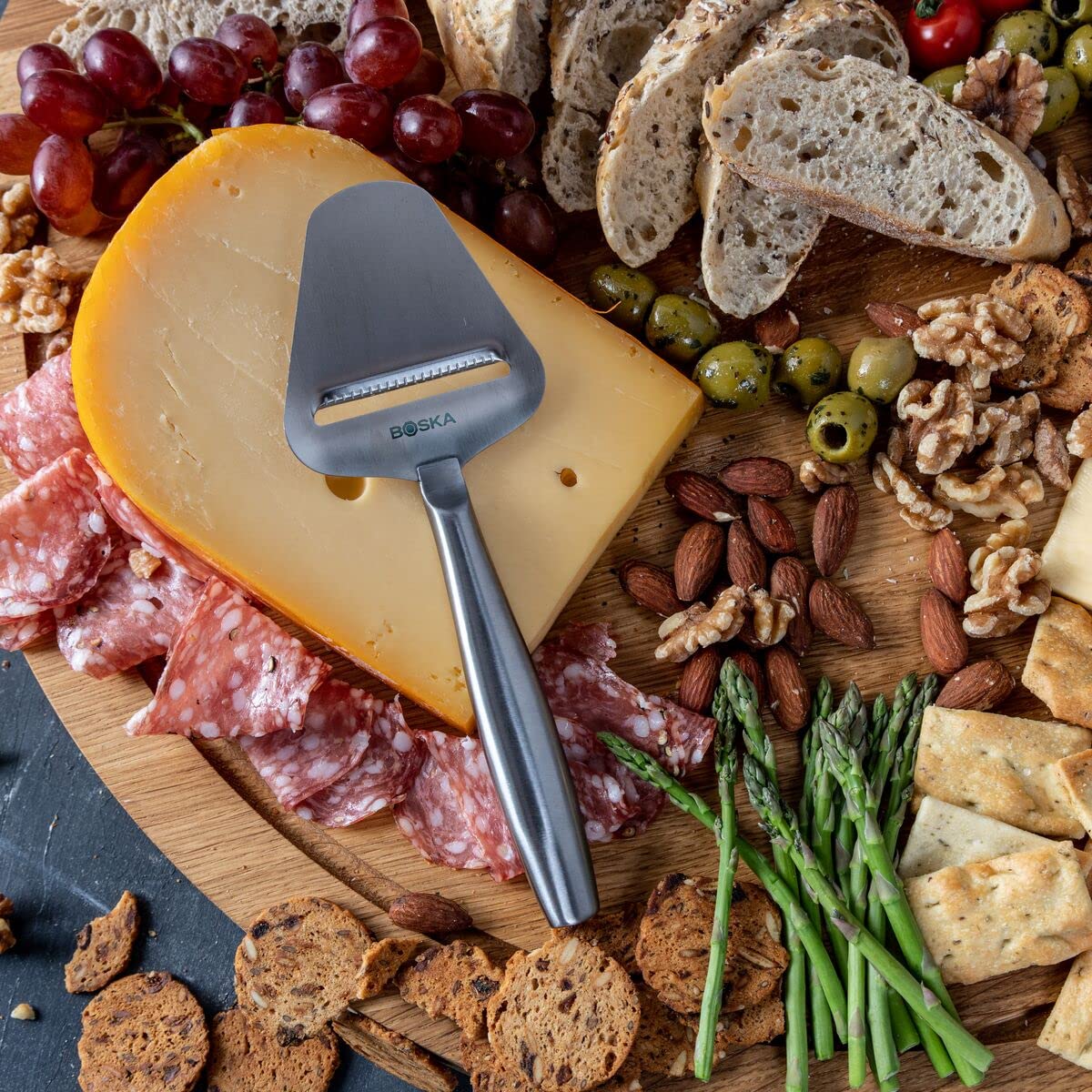
Wire cheese slicers create uniform slices, especially for softer cheeses like Havarti or Gouda, and are great for presenting elegant cheese platters.
Wire slicers feature adjustable tension to control slice thickness. Tighter tension creates thinner slices, while looser tension creates thicker ones. Experiment to find what works best for your cheese and preference.
Cleaning wire slicers can be fiddly, as cheese can get caught in the wire. A small brush and warm soapy water are usually sufficient. They tend to work best with cheeses that have a relatively smooth texture.
Beyond the Blade: Specialty Tools
Beyond knives, other tools can enhance your cheese experience. Cheese planes, for example, create thin, delicate shavings of hard cheeses with a unique texture.
Cheese scoops are useful for soft cheeses, allowing easy portioning without damaging texture. They are a must-have for anyone serving brie or camembert frequently. Formaticum offers elegant options.
Some cheese boards have integrated knife storage, a convenient way to keep tools organized, especially if counter space is limited. WebstaurantStore offers a selection of these boards.
Which Tool For Which Cheese?
| Cheese Type | Recommended Tool | Performance Assessment |
|---|---|---|
| Brie | Soft Cheese Knife (Flat Blade) | Excellent |
| Cheddar | Cheese Wire or Hard Cheese Knife (Serrated) | Good |
| Parmesan | Parmesan Knife (Pointed Tip, often with a split) | Excellent |
| Gouda | Cheese Slicer or Hard Cheese Knife (Serrated) | Good |
| Camembert | Soft Cheese Knife (Flat Blade) | Excellent |
| Swiss | Cheese Slicer or Offset Cheese Knife | Good |
| Romano | Parmesan Knife (Pointed Tip, often with a split) | Good |
| Taleggio | Soft Cheese Knife (Flat Blade) | Excellent |
Illustrative comparison based on the article research brief. Verify current pricing, limits, and product details in the official docs before relying on it.
Knife Materials and Maintenance
Stainless steel is the most popular material for cheese knives due to its durability, corrosion resistance, and ease of maintenance. Carbon steel blades offer superior sharpness and edge retention but require more care to prevent rust.
Handle materials vary, including wood, plastic, and composites. Wood handles offer a classic look but need occasional oiling to prevent drying and cracking. Plastic handles are more durable and easier to clean but may be less comfortable.
Sharpening is essential for knife performance. A honing steel realigns the blade edge, while a sharpening stone restores a dull edge. Store knives safely in a block or on a magnetic strip to prevent accidents.
2026 Trends: What’s New in Cheese Cutting?
Manufacturers are focusing on ergonomic handle designs for comfort during extended use and increasing the use of sustainable materials like bamboo and recycled plastic.
undefined seen any truly "smart" cheese knives yet, but there's growing interest in knives with integrated temperature sensors to help determine the optimal serving temperature for different cheeses. This is still very much in the experimental phase.
Overall, the trend in cheese cutting equipment is towards greater precision, comfort, and sustainability. While there aren’t any radical changes on the horizon, expect to see continued refinement of existing designs and a growing emphasis on quality and craftsmanship.


No comments yet. Be the first to share your thoughts!