
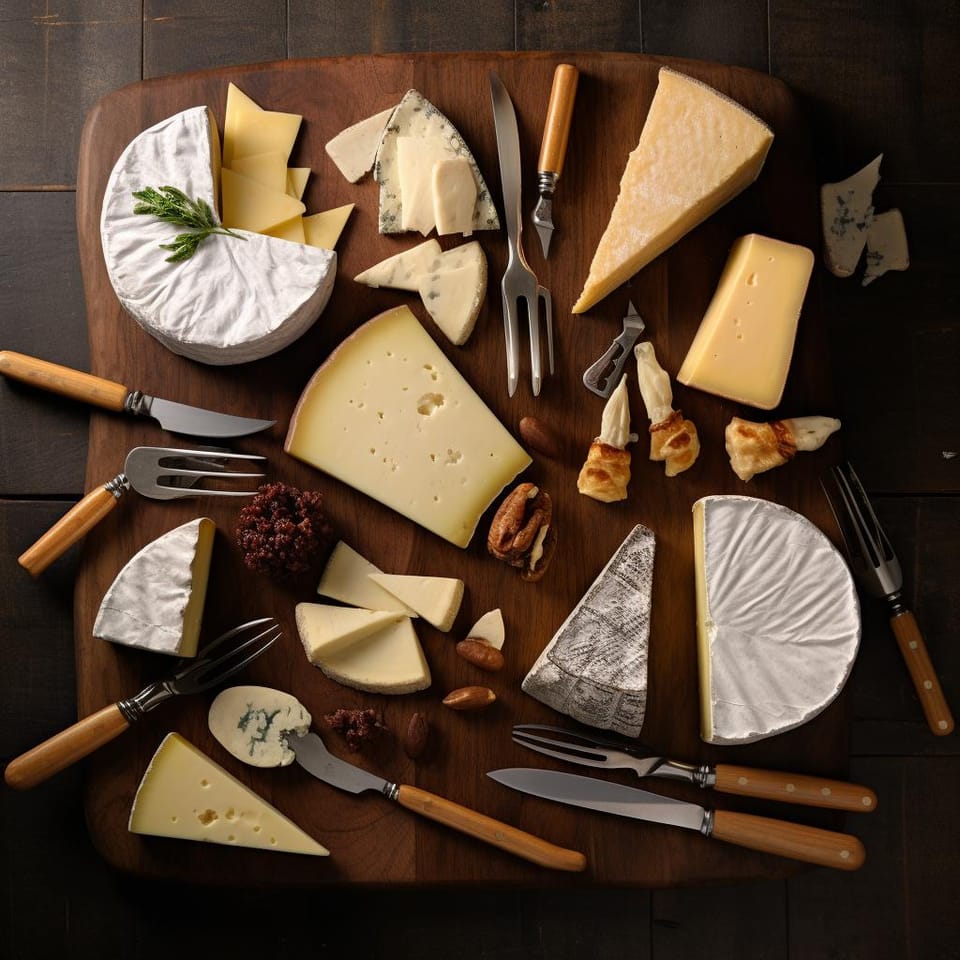

Match the knife to the cheese
A cheese knife is not just a smaller dinner knife. Shape matters. Soft cheese sticks to broad metal, and hard cheese can crack if the blade is too thick or dull.
For brie and camembert, use a thin or open-work blade so the cheese does not smear across the knife. For firmer cheese, use a slicer or plane for even pieces. For dense wedges, start with a chef's knife, then move to the smaller serving knives once the cheese is board-ready.
:max_bytes(150000):strip_icc()/Best-Cheese-Knives-2-FW-tested-tout-bdd29523159844fb91ee636049f5321d.jpg)
The simple rule: choose the knife that creates the least drag.
| Knife | Best for | Cheese examples |
|---|---|---|
| Open-work/Holey | Soft/Creamy | Brie, Camembert |
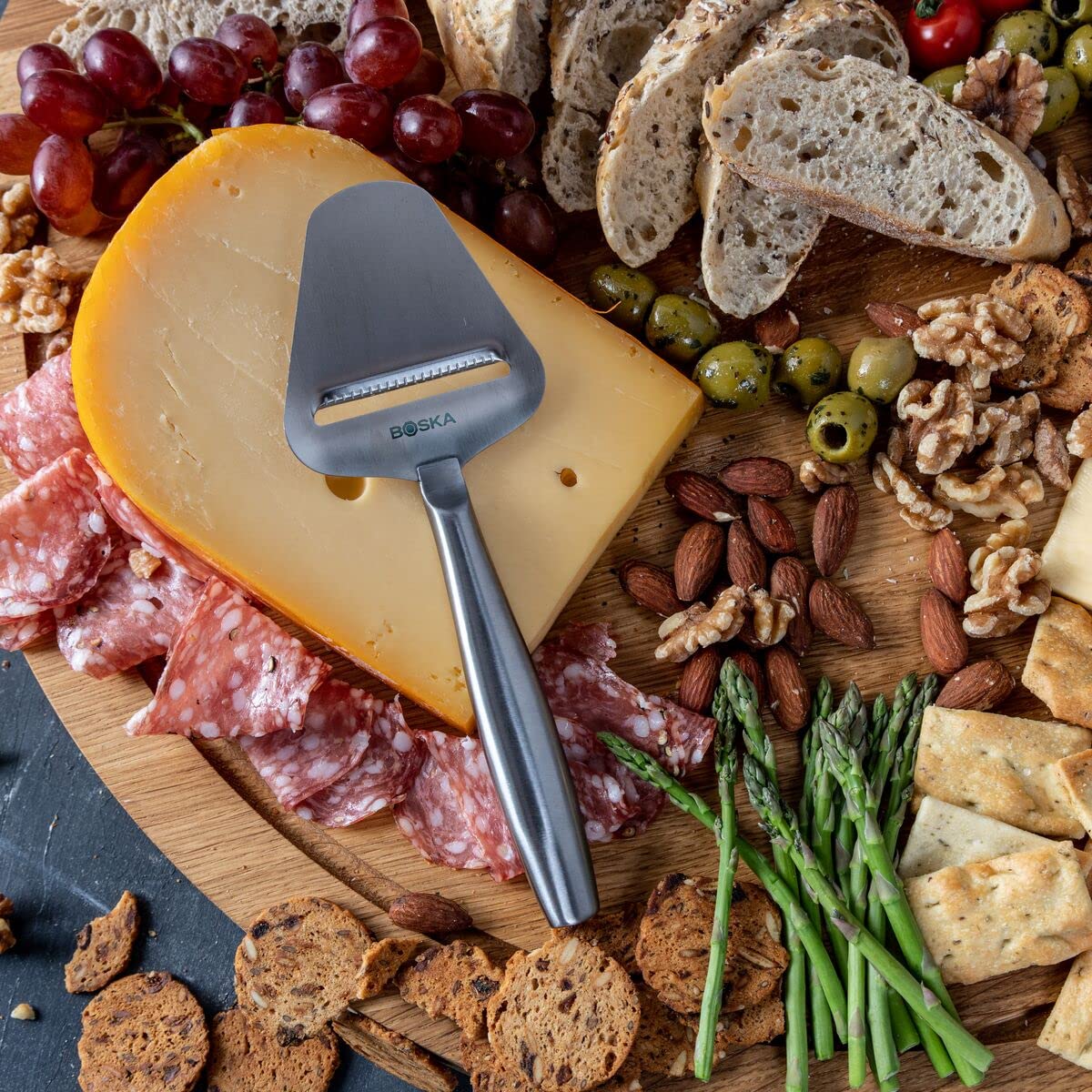
| Cheese Plane | Semi-soft | Havarti, Swiss, Fontina |
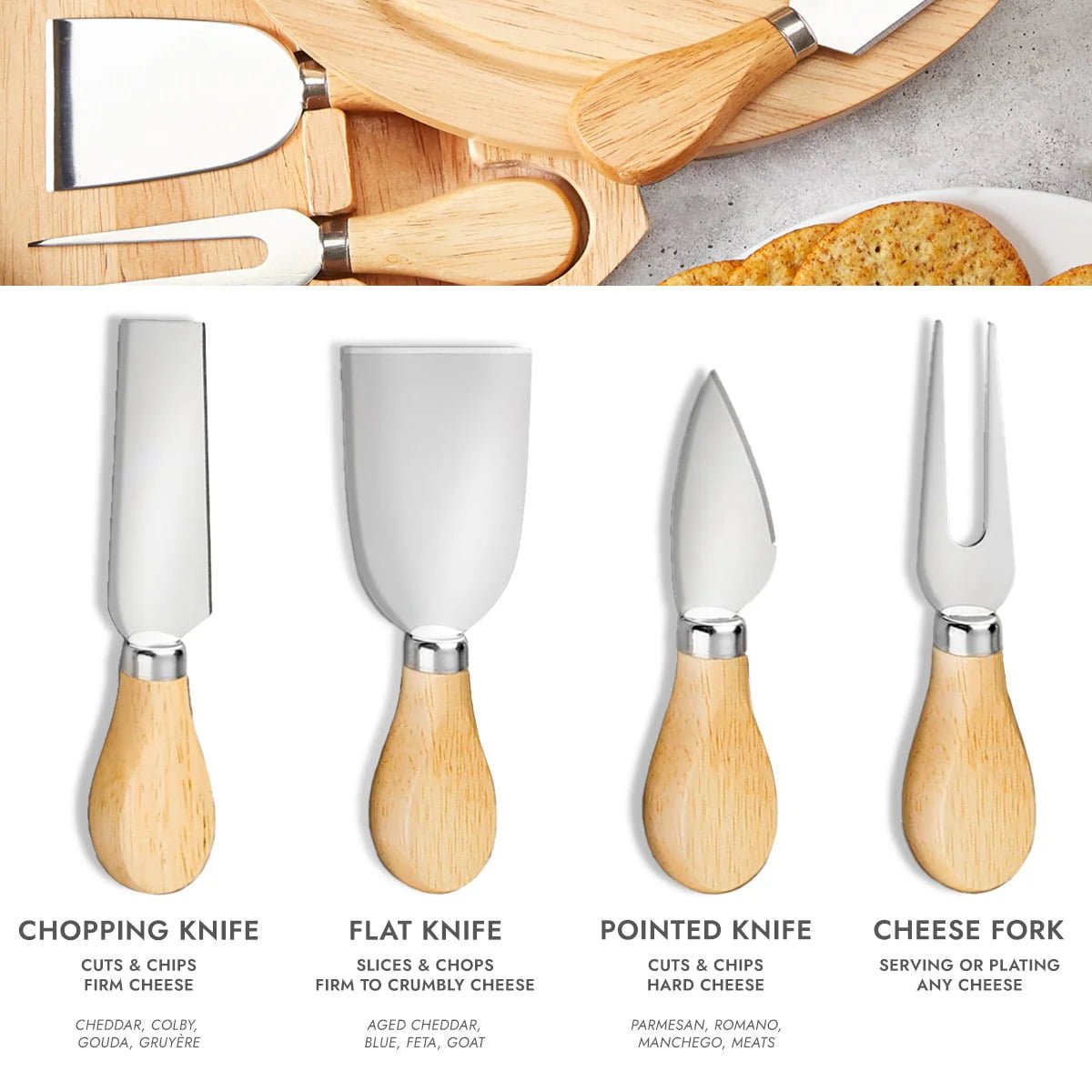
| Pronged/Hard | Firm/Hard | Manchego, Aged Cheddar, Parmesan |
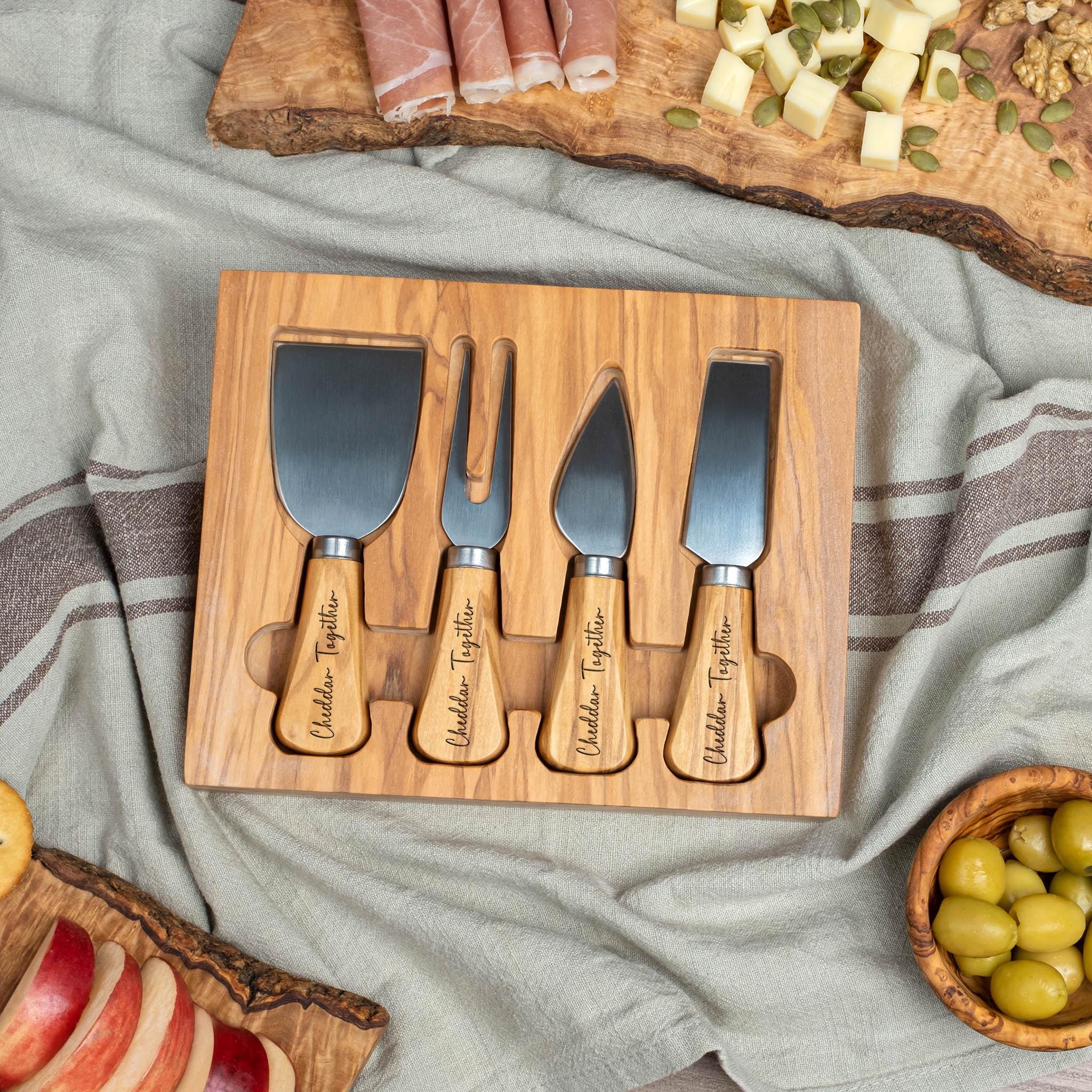
Three useful cheese knives
You do not need a drawer full of specialty tools. A small set can cover most boards: a perforated knife for soft cheese, a slicer or plane for semi-firm blocks, and one sturdy knife for harder wedges.
If you buy only one thing, make it a reliable multi-use cheese knife. If you build boards often, add a slicer and a compact set so guests are not using the same blade for blue cheese, brie, and cheddar.


As an Amazon Associate, we may earn from qualifying purchases.
Pair the cut with the cheese
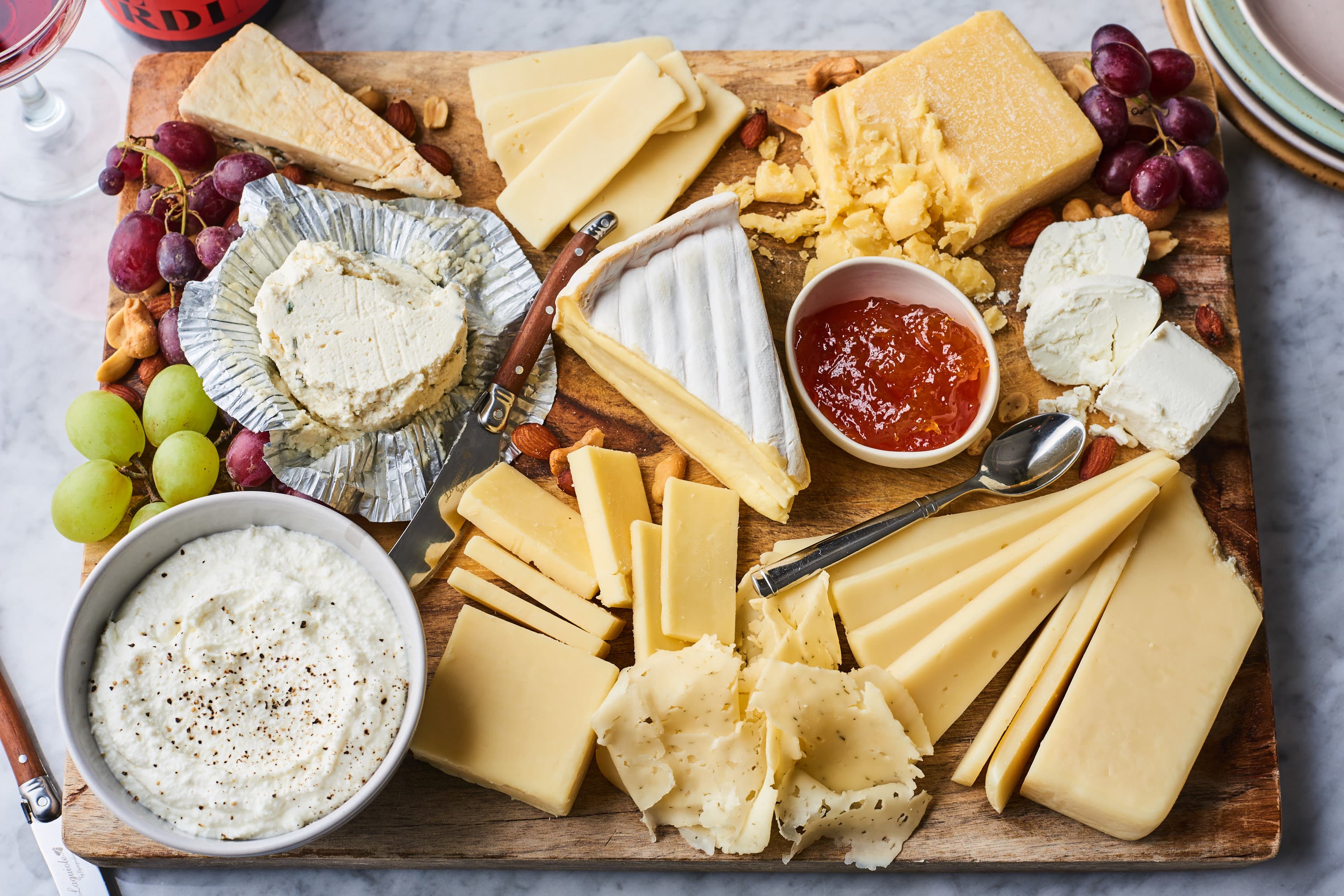
Camembert is soft and rich, so keep the knife thin and the pairings bright. Grapes, apples, and tart preserves cut through the creaminess without making the board feel heavy.
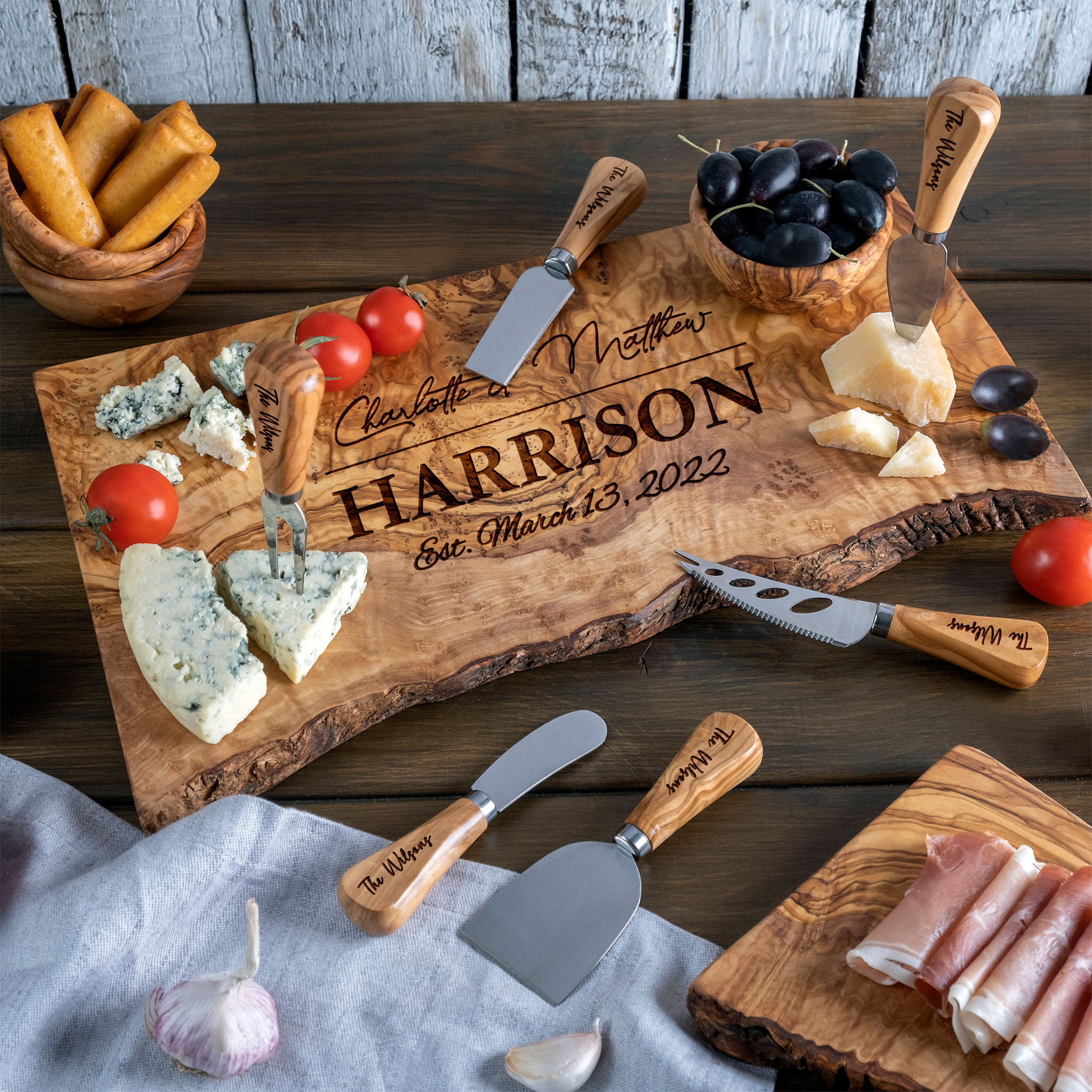
Pecorino Romano is salty and firm. Use a sturdy knife for the first cuts, then serve it in smaller shards with olives, soppressata, and rustic bread.
Taleggio sits in the middle. A smooth-edged knife works well, especially if the cheese is still slightly cool. Honey and walnuts are enough. It does not need much else.
When a chef's knife is better
Cheese knives look better on the board, but they are not always the right tool for breaking down a large wedge. For dense cheese, start with a sharp chef's knife. The wider blade gives you more control, and you are less likely to split the cheese into jagged chunks.
— Josh Donald, Knife Expert (via The Cheese Professor)If they're really thick, they just don't cut hard cheeses very well.
Use the serving knives once the cheese is portioned. A soft-cheese knife keeps brie from smearing. A slicer handles semi-firm cheese. A fork-tipped knife helps move pieces without touching every slice.
For a big wedge of Parmigiano-Reggiano or aged cheddar, do the heavy cut first. Then bring the smaller pieces to the board.
Keep the edge clean
A dull cheese knife turns neat slices into torn edges and crumbs. Keep the blade clean, dry, and sharp enough that it does not drag through the cheese.

Honing is quick maintenance. Sharpening makes a new edge. Do the first often and the second only when the knife actually needs it.

No comments yet. Be the first to share your thoughts!